
Gypsum False Ceiling: Design Ideas, Benefits & Cost Guide for Corporate Offices
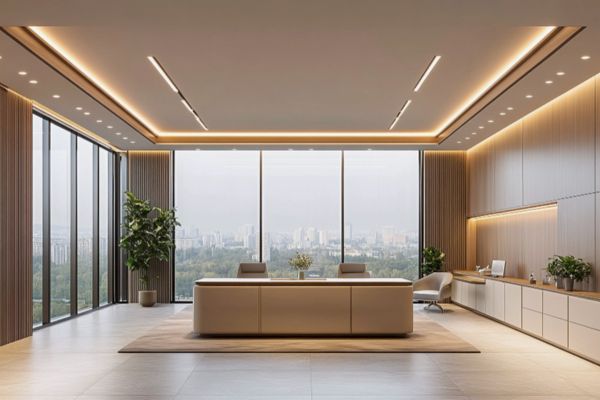
Gypsum False Ceiling: Design Ideas, Benefits & Cost Guide for Corporate Offices Book Free Consultation When it comes to designing a modern corporate workspace, most businesses focus on walls, furniture, and flooring — but often overlook one of the most impactful elements: the ceiling. A well-designed gypsum false ceiling can completely transform the look, lighting, and acoustics of your office. In today’s competitive business environment, office interiors are not just about aesthetics — they influence productivity, brand perception, and employee comfort. In this detailed guide, we’ll explore gypsum false ceiling designs, benefits, lighting integration ideas, cost factors, and maintenance tips — specifically for corporate offices. What is a Gypsum False Ceiling? A gypsum false ceiling is a suspended ceiling system made using gypsum boards fixed onto a metal framework below the structural ceiling. It hides wiring, ducts, pipes, and uneven concrete surfaces while providing a clean and sophisticated finish. Gypsum is widely preferred in corporate office interiors because it is: Lightweight Fire-resistant Smooth-finished Easy to shape and design Suitable for modern lighting systems Why Gypsum False Ceiling is Ideal for Corporate Offices 1️⃣ Modern & Professional Appearance Corporate offices demand a clean, premium, and structured look. Gypsum ceilings provide seamless finishes with sharp edges and minimal joints, creating a sleek environment that reflects professionalism. Whether it’s a reception area, conference room, director cabin, or open workspace — gypsum ceilings elevate the overall ambiance. 2️⃣ Easy Lighting Integration One of the biggest advantages of gypsum ceilings is their compatibility with modern lighting systems. You can easily integrate: LED panel lights Cove lighting Strip lighting Recessed spotlights Hanging designer lights Layered lighting enhances mood, reduces eye strain, and improves productivity in office spaces. 3️⃣ Acoustic Benefits for Better Productivity Noise distraction is one of the biggest productivity killers in corporate offices. Gypsum false ceilings can be designed with acoustic backing materials to: Reduce echo Control noise levels Improve speech clarity in meeting rooms Enhance focus in open workspaces This makes them ideal for boardrooms, call centers, and collaborative spaces. 4️⃣ Conceals Wires & HVAC Systems Corporate offices require extensive electrical wiring, internet cabling, CCTV wiring, and HVAC ducts. A gypsum ceiling helps conceal all these installations neatly while maintaining easy access through inspection panels. 5️⃣ Fire Resistance & Safety Gypsum boards are naturally fire-resistant due to the water content present in them. This makes them a safer choice for commercial and corporate spaces. Trending Gypsum False Ceiling Design Ideas for Corporate Offices 🔹 1. Minimalist Grid Ceiling Clean rectangular sections with LED panel lights are perfect for open workstations. This design offers uniform lighting and a structured corporate feel. Best for: IT offices, coworking spaces, corporate floors. 🔹 2. Cove Lighting Design Indirect LED strip lighting inside recessed edges creates a soft glow and premium look. Best for: Reception areas Director cabins Premium conference rooms 🔹 3. Layered / Multi-Level Ceiling Multiple levels add depth and dimension to the ceiling. Combined with spotlights and strip lights, this design creates a dynamic corporate interior. Best for: Boardrooms Creative agencies Design studios 🔹 4. Floating Ceiling Panels Floating gypsum panels give a modern, architectural appearance. These panels appear detached from the ceiling, often highlighted with LED lighting. Best for: Modern tech companies Startup offices Premium corporate interiors 🔹 5. Integrated Branding Ceiling You can customize ceiling designs to subtly reflect your brand identity through shapes, lighting colors, or design patterns. This is especially useful in: Reception areas Client meeting spaces Corporate headquarters Cost Guide for Gypsum False Ceiling in Corporate Offices The cost of a gypsum false ceiling depends on several factors: 📌 Key Cost Factors: Design complexity Lighting integration Ceiling height Material quality Area size (per square foot) Acoustic treatment requirements 💰 Approximate Cost (India Market Estimate) Basic gypsum ceiling: ₹75 – ₹120 per sq. ft. Designer ceiling with lighting: ₹120 – ₹250 per sq. ft. Acoustic gypsum ceiling: ₹150 – ₹300 per sq. ft. Note: Costs may vary depending on city, design customization, and contractor expertise. For large corporate projects, bulk area reduces per-square-foot cost. Maintenance Tips for Gypsum False Ceilings Gypsum ceilings are relatively low maintenance, but proper care ensures longevity. ✔ Avoid water leakage from above✔ Use high-quality paint for durability✔ Clean with dry cloth (avoid excessive moisture)✔ Inspect joints annually✔ Check lighting fixtures periodically If installed properly, a gypsum ceiling can last 10–15 years without major repairs. Gypsum vs POP: What’s Better for Corporate Offices? Feature Gypsum POP Installation Time Faster Slower Finish Smooth & Uniform Depends on workmanship Cleanliness Less messy More dust during work Crack Resistance More stable Can crack over time Best For Corporate Offices Residential Decor For corporate interiors, gypsum is generally the more reliable and professional choice. How to Choose the Right Gypsum Ceiling Design for Your Office Before finalizing the design, consider: Nature of business (corporate, creative, industrial) Office size and ceiling height Lighting requirements Acoustic needs Budget range Brand identity A well-planned ceiling design not only enhances aesthetics but also improves comfort and functionality. Final Thoughts A gypsum false ceiling is not just a decorative element — it’s a strategic design choice for modern corporate offices. From improving acoustics to enhancing lighting and reinforcing brand identity, gypsum ceilings offer a complete interior solution. If you are planning a corporate office renovation or setting up a new workspace, investing in a professionally designed gypsum false ceiling can significantly elevate your office environment. A thoughtfully designed ceiling creates a workspace that feels modern, organized, and productivity-driven — exactly what today’s corporate world demands.
Why Modular Office Furniture is the Future of Modern Workspaces
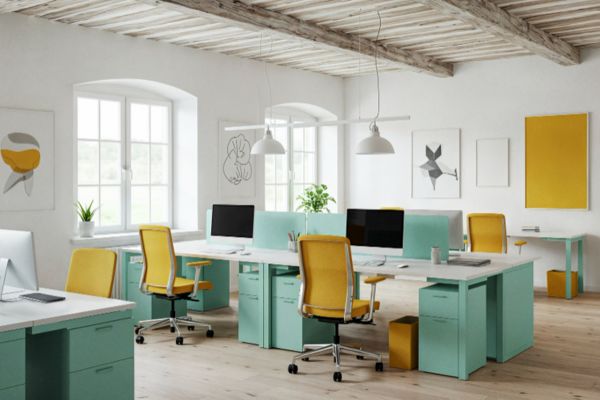
Why Modular Office Furniture is the Future of Modern Workspaces Book Free Consultation The way we work has changed — and so have our offices. Today’s businesses demand flexibility, scalability, and smart space utilization. Traditional bulky desks and fixed layouts no longer meet the needs of growing companies. This is where modular office furniture steps in as a game-changer. From startups to large enterprises, modular solutions are redefining modern workspaces by offering flexibility, aesthetic appeal, and long-term cost efficiency. If you’re planning to upgrade your workspace, here’s why modular office furniture is shaping the future of office interior design. What is Modular Office Furniture? Modular office furniture refers to flexible, pre-designed furniture systems that can be easily assembled, rearranged, expanded, or reconfigured according to business needs. Unlike conventional office furniture, modular systems allow companies to adapt layouts without major renovation or replacement costs. These systems include: Modular workstations Office cubicles Conference tables Storage units Modular desks Partition systems The biggest advantage? They grow with your business. 1️⃣ Flexibility That Supports Modern Work Culture Modern workplaces are dynamic. Teams expand, departments shift, and hybrid work models are becoming common. Modular office furniture allows businesses to: Rearrange layouts quickly Create collaborative zones Design private workspaces when needed Support hybrid and flexible seating Instead of investing in completely new furniture during expansion, modular components can simply be added or adjusted. 2️⃣ Maximum Space Efficiency Office space is expensive. Every square foot matters. Modular office furniture is designed to optimize available space through: Compact workstation designs Smart storage integration Multi-functional units Vertical storage solutions Whether you have a small office or a large corporate setup, modular systems ensure no space goes unused. 3️⃣ Customization According to Brand Identity Your office reflects your brand. Modular furniture offers customization in: Colors Finishes Materials Layout designs Desk configurations Businesses can align office interiors with their brand identity, creating a professional and cohesive work environment. A well-designed modular workspace enhances both employee morale and client perception. 4️⃣ Easy Installation & Minimal Disruption One of the biggest benefits of modular office furniture is quick installation. Pre-fabricated components Easy assembly Less on-site carpentry work Reduced downtime Companies can upgrade their workspace without disrupting daily operations. This makes modular furniture ideal for fast-growing businesses and startups. 5️⃣ Scalability for Growing Businesses Business growth is unpredictable. Hiring increases. New teams form. Departments expand. With modular systems: You can add workstations anytime Reconfigure layouts as teams grow Expand without major capital expenditure This scalability makes modular office furniture a future-proof investment. 6️⃣ Cost-Effective in the Long Run While the initial investment may seem comparable to traditional furniture, modular systems save money over time by: Reducing renovation costs Minimizing replacement expenses Allowing partial upgrades instead of full replacements Lower maintenance requirements It’s a smart financial decision for companies planning long-term growth. 7️⃣ Improved Aesthetics & Modern Appeal Modern offices are no longer dull and monotonous. Modular office furniture offers: Sleek designs Clean lines Contemporary finishes Better cable management Organized layouts A visually appealing workspace improves productivity, employee satisfaction, and overall workplace culture. 8️⃣ Sustainable & Eco-Friendly Options Many modular furniture manufacturers now focus on sustainable materials and eco-friendly production processes. Because components can be reused and reconfigured, waste is significantly reduced compared to traditional furniture replacement cycles. This makes modular office furniture a responsible choice for environmentally conscious businesses. Why Businesses Are Shifting to Modular Office Furniture The future workplace is flexible, collaborative, and scalable. Companies no longer want rigid layouts that limit growth. Modular office furniture provides: ✔ Adaptability✔ Smart space planning✔ Professional aesthetics✔ Long-term savings✔ Easy maintenance Whether you are designing a new office or renovating an existing one, modular solutions provide the perfect balance between functionality and design. Final Thoughts The future of modern workspaces is all about adaptability and smart design. Modular office furniture is not just a trend — it’s a strategic investment that supports business growth, employee comfort, and efficient space utilization. If you want a workspace that evolves with your business, improves productivity, and reflects your brand identity, modular office furniture is the solution.
Turnkey Interior Solutions: The Smart Way to Build Your Dream Office Space
Turnkey Interior Solutions: The Smart Way to Build Your Dream Office Space Book Free Consultation In today’s fast-paced business environment, companies don’t just need office space — they need a fully functional, aesthetically appealing, and performance-driven workplace. Managing multiple vendors, contractors, designers, and suppliers can quickly become overwhelming. That’s where turnkey interior solutions come in. If you’re planning to build or renovate your office, understanding turnkey interiors can save you time, money, and unnecessary stress. In this complete guide, we’ll walk you through everything — from planning and design to execution and final handover — and explain why turnkey projects are the smartest way to create your dream office space. What Are Turnkey Interior Solutions? A turnkey interior project is a complete, end-to-end interior solution handled by a single company. From conceptual planning to final handover, everything is managed under one contract. The word “turnkey” simply means:Once the project is complete, you just turn the key and start working. There’s no need to coordinate between architects, designers, civil contractors, electricians, carpenters, furniture vendors, and project managers separately. A turnkey interior contractor handles everything. Why Turnkey Interiors Are the Smart Choice for Office Spaces 1️⃣ Single Point of Responsibility One of the biggest challenges in traditional interior projects is miscommunication between multiple vendors. In turnkey projects: One company is responsible for planning, design, execution, and delivery. Clear accountability reduces delays. Issues are resolved faster. This eliminates the blame game and keeps the project on track. 2️⃣ Time-Saving & Faster Execution Time is money — especially for businesses. With turnkey interior solutions: Planning and execution are streamlined. Procurement happens in parallel with design. Project timelines are well-structured. Deadlines are strictly monitored. This significantly reduces project completion time compared to traditional methods. 3️⃣ Cost Control & Budget Transparency Budget overruns are common in office interior projects when different vendors work independently. Turnkey interiors offer: Pre-defined project costing Clear BOQ (Bill of Quantities) Centralized procurement Better vendor negotiation This ensures better cost control and minimizes unexpected expenses. Step-by-Step Process of a Turnkey Interior Project Let’s understand how a professional turnkey interior project works: 🏢 1. Requirement Analysis & Space Planning The process begins with: Understanding your business needs Analyzing team size and workflow Planning cabin layouts, workstations, meeting rooms, and breakout areas Future expansion considerations A smart layout improves productivity and employee satisfaction. 🎨 2. Concept Design & Visualization After planning, designers create: 2D layout plans 3D visualizations Material mood boards Lighting concepts Brand integration elements This stage ensures your office reflects your company’s identity and culture. 🛠️ 3. Detailed Design & Technical Drawings This includes: Electrical layout HVAC planning False ceiling design Furniture detailing Civil modification plans Proper detailing prevents execution errors later. 📦 4. Procurement & Manufacturing Turnkey contractors manage: Material sourcing Office furniture manufacturing Vendor coordination Quality control Bulk procurement often reduces overall cost. 🏗️ 5. Execution & Site Management This is where the actual transformation begins: Civil work Electrical & networking setup Furniture installation Flooring & ceiling work Painting & finishing Professional project managers supervise every stage to ensure quality and timely completion. 🔑 6. Final Handover Before handover: Quality inspection is conducted. Snag lists are cleared. Final cleaning is done. All systems are tested. After this, your office is fully ready for operations. Benefits of Turnkey Interior Projects for Businesses Here’s why companies increasingly prefer turnkey interior solutions: ✔️ Hassle-Free Experience No daily coordination headaches. ✔️ Faster Project Completion Parallel processes reduce time. ✔️ Reduced Cost Overruns Controlled budgeting and centralized procurement. ✔️ Better Quality Control Single team ensures consistency in design and execution. ✔️ Professional Project Management Timelines, workforce, and materials are managed efficiently. Turnkey Interior vs Traditional Interior Approach Turnkey Interior Traditional Interior Single contractor Multiple vendors Fixed timeline Delays common Budget control Cost escalation frequent Streamlined communication Miscommunication issues End-to-end responsibility Shared accountability For growing businesses, turnkey interiors clearly offer better efficiency and reliability. Who Should Choose Turnkey Interior Solutions? Turnkey projects are ideal for: Startups setting up their first office Corporate offices expanding operations IT companies Co-working spaces Healthcare offices Retail showrooms If you want a professional, well-managed office without operational disruption, turnkey is the right choice. Key Things to Check Before Hiring a Turnkey Interior Contractor Before finalizing your partner, ensure: Strong project portfolio Transparent costing structure Clear project timeline In-house manufacturing capability Dedicated project management team Post-handover support Choosing the right partner makes all the difference. Final Thoughts Building your dream office shouldn’t feel like managing a construction battlefield. Turnkey interior solutions simplify the entire journey — from concept to completion. With better cost control, faster execution, and a single point of accountability, turnkey projects are undoubtedly the smartest way to design and build a modern office space. If you’re planning to transform your workspace, investing in a professional turnkey interior solution can save you time, protect your budget, and deliver results beyond expectations.
How to Select the Perfect Office Interior Color Combination for Productivity & Brand Identity
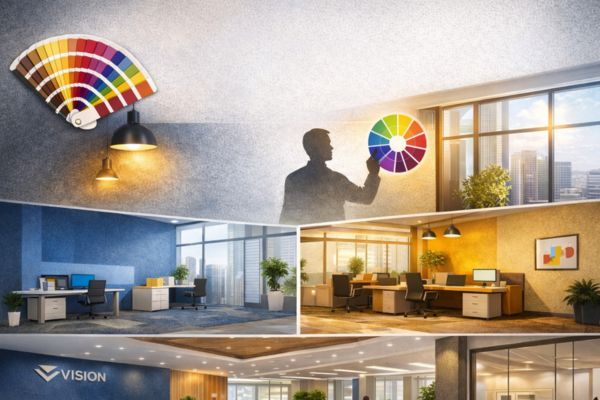
How to Select the Perfect Office Interior Color Combination for Productivity & Brand Identity Book Free Consultation When it comes to office interior designing, color is not just about aesthetics — it directly influences productivity, employee mood, creativity, and even client perception. The right office color combination can transform a dull workspace into an energetic, professional, and brand-aligned environment. If you are planning a new office or renovating your workspace, this complete guide will help you choose the perfect office interior color combination that enhances productivity while reflecting your brand identity. Why Office Color Combination Matters Colors affect human psychology more than we realize. Employees spend 8–10 hours a day in the office, and the surrounding colors can: Increase focus and efficiency Improve creativity Reduce stress and fatigue Enhance team collaboration Create a strong first impression on clients A well-planned office interior design uses color strategically — not randomly. Understanding Color Psychology in Office Interior Designing Before selecting paint shades or furniture finishes, it’s important to understand how colors impact behavior. Blue – The Productivity Booster Blue is widely used in corporate offices because it promotes focus, calmness, and efficiency. It is ideal for: IT companies Finance firms Corporate headquarters Workstations and meeting rooms Light blue tones work best for maintaining balance without making the space feel cold. Green – Balance & Stress Reduction Green represents nature and stability. It reduces eye strain and works beautifully in: Creative studios HR departments Open office layouts Soft green shades paired with wooden textures create a refreshing environment. Yellow – Creativity & Energy Yellow stimulates optimism and creativity. However, it should be used carefully: Best for brainstorming rooms Ideal for startup offices Accent walls or breakout areas Avoid using too much bright yellow as it may cause visual fatigue. White & Neutral Tones – Clean & Professional White, beige, grey, and off-white create a clean and sophisticated corporate look. They: Make small offices look bigger Improve light reflection Provide flexibility in furniture selection Modern offices often combine neutral walls with bold brand-colored accents. Aligning Office Colors with Brand Identity Your office interior should reflect your brand personality. Ask yourself: Is your brand bold and innovative? Is it premium and sophisticated? Is it youthful and energetic? Is it corporate and conservative? For example: A tech startup may use blue with vibrant accent colors. A law firm may prefer beige, brown, and deep blue. A creative agency may mix grey with yellow or orange highlights. The goal is consistency between your logo, website, marketing materials, and office interior. Choosing the Right Color Combination (Step-by-Step Guide) Step 1: Define Your Primary Brand Color Start with your brand’s main color. This can be used in: Reception wall Logo backdrop Meeting room panels Feature partitions Step 2: Select a Neutral Base Choose neutral tones for: Main walls Ceilings Flooring This prevents the space from looking overwhelming. Step 3: Add Accent Colors Accent colors can be introduced through: Modular office furniture Wall art Upholstery Ceiling highlights Glass film branding Keep the 60-30-10 rule in mind: 60% dominant color (neutral base) 30% secondary color 10% accent color The Impact of Lighting on Office Colors Lighting can completely change how a color looks. Natural Light Offices with large windows can use slightly darker shades because sunlight balances them. Artificial Lighting Warm lighting enhances beige and earthy tones. Cool white lighting works well with blue and grey. Before finalizing colors, always test paint samples under actual lighting conditions. Modern Corporate Color Trends in 2026 If you want a contemporary corporate office look, here are some trending combinations: Grey + Navy Blue White + Wooden Finish Beige + Olive Green Charcoal Grey + Brass Accents Off-White + Teal Minimalism with subtle bold highlights is currently dominating corporate building interiors. Common Mistakes to Avoid Even experienced businesses make color selection errors. Avoid these: Using too many bright colors Ignoring natural light conditions Choosing trendy shades without considering brand identity Matching everything exactly to the logo Overusing dark colors in small offices Balance is the key. Best Color Ideas for Different Office Areas Reception Area Use brand-focused bold colors to create a strong first impression. Workstations Choose calming tones like light blue, grey, or off-white. Conference Rooms Use blue, green, or muted earthy shades to improve concentration. Breakout Zones Introduce vibrant accent colors for creativity and relaxation. How Professional Office Interior Designers Help An experienced office interior contractor understands: Space planning Color harmony Furniture coordination Lighting integration Acoustic balance Professional designers create mood boards, 3D renders, and material samples before finalizing the combination, ensuring your office looks cohesive and premium. Final Thoughts Selecting the perfect office interior color combination is a strategic decision — not just a decorative choice. The right colors can: ✔ Boost productivity✔ Strengthen brand identity✔ Improve employee satisfaction✔ Create a professional corporate image Whether you are designing a startup workspace or a large corporate building interior, thoughtful color planning makes all the difference. If you are planning your next office interior project, start with your brand identity, understand color psychology, evaluate lighting conditions, and maintain balance. A well-designed office doesn’t just look good — it performs better.
